Ideas
If the AI you run on got switched off tomorrow
18 June 2026 · 7 min read
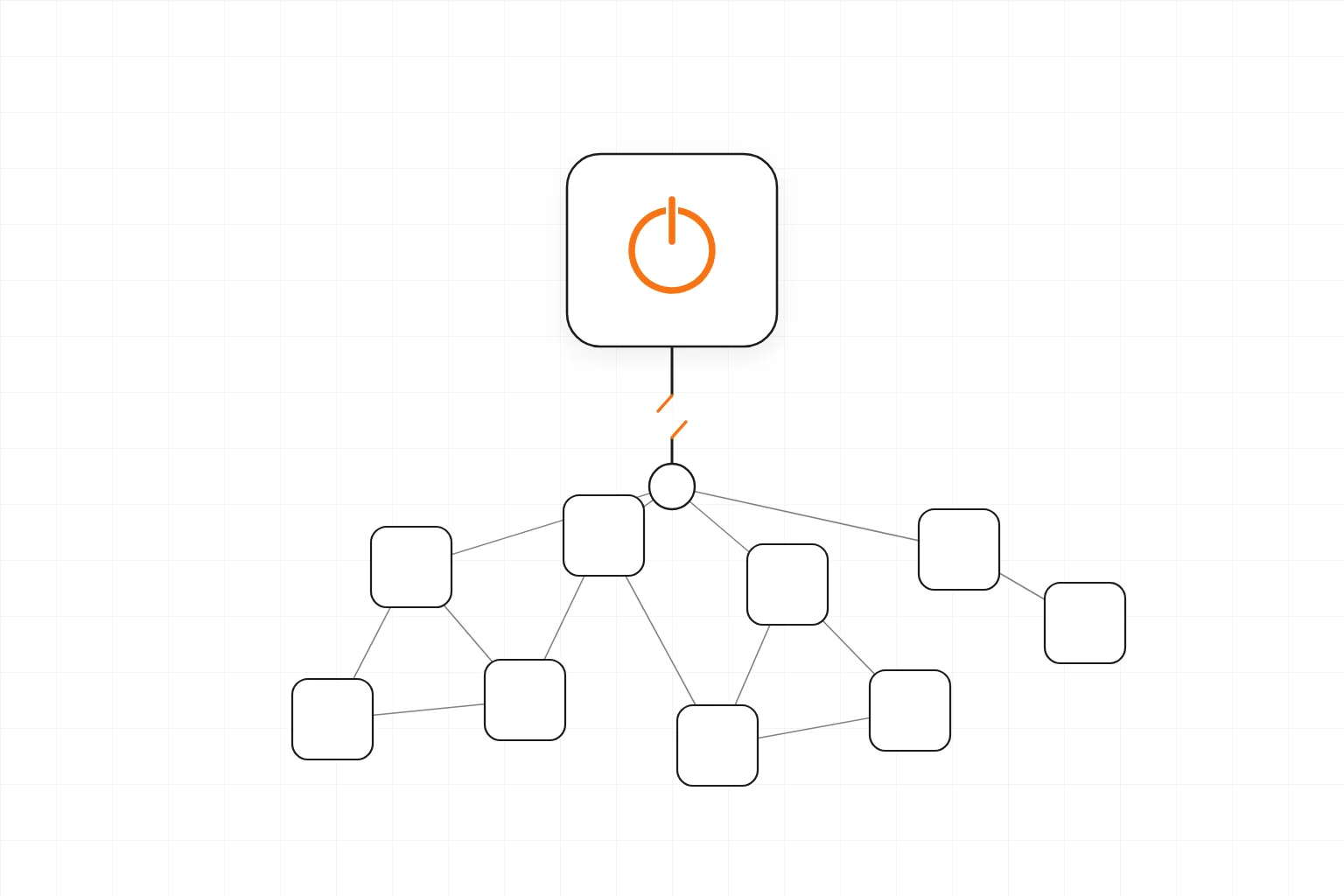
On 12 June this year, the US government told one of the largest AI companies in the world to switch off its two newest models for every foreign national on the planet. The company, Anthropic, did it the same day. If you were a business outside the United States using those models in your tools, they stopped working, and nobody asked your opinion.
This was not a hostile country being sanctioned. It was everyone outside the US, close allies like New Zealand included. The models were new, the stated reason was contested by the company itself, and the company had no real ability to say no. It turned out to be temporary and limited to those two models, with older versions still running. But it showed something plainly: a switch exists, and the hand on it is not yours.
This is not paranoia, it is concentration
Almost all of the AI worth using comes from a small number of US companies. A handful of them, OpenAI, Google and Anthropic, account for the large majority of business AI use today. Add Microsoft and Meta and you have more or less the whole list. Every one of them is American. That is not a conspiracy, it is just where the capability and the money are.
What it means is that two separate switches sit above the AI in your business, and you hold neither. The US government can restrict what those companies are allowed to provide, through export controls and sanctions. And each company can change its own terms, its pricing, or where it is willing to operate, whenever it decides to. Last week was the first switch. The second one gets pulled far more quietly and far more often.
Be honest about the size of the risk
It is worth keeping this in proportion, because the answer to a real risk is not panic. No friendly Western country has ever been cut off wholesale from AI services, and New Zealand sits on the comfortable side of every US list that matters. A blanket ban on a country like ours remains unlikely.
The problem you are actually exposed to is smaller and far more common than a geopolitical ban. A model you depend on gets retired. A price doubles. A use you rely on is restricted. A service is briefly pulled, the way it was last week. The lesson is not that the sky is falling. It is that the dependency is real, the switch is real, and it belongs to someone else.
What you would actually lose
Forget national sovereignty for a moment. The thing at risk is your operations. If the AI under one of your systems changed or vanished, here is what that costs a normal business:
- A workflow your team now relies on stops mid-task, and the work backs up while you scramble.
- A price or terms change you have to swallow, because rebuilding around it would cost more than paying.
- A model version retired underneath you, so a tool you carefully tuned starts behaving differently overnight.
- Your data and your whole way of working sitting inside one vendor you cannot easily leave.
Sovereign AI does not mean building your own
When people hear sovereign AI they picture a government megaproject, or New Zealand building its own ChatGPT, or servers humming in your back office. For an ordinary business that is the wrong picture, and you will never do it. It is not the point.
The version that matters is smaller and entirely practical: own your data and your workflow, and treat the AI model as a part you can swap. Sovereign here means independent, not home-grown. You are not trying to escape American AI, you should use the best you can get. You are making sure that no single provider's decision, or its government's, can hold your business hostage.
What that looks like in practice
It is mostly a set of design choices made early, not a product you buy:
- Your data, your prompts and your process live in systems you control, not locked inside one vendor's product.
- The workflow is built so the model is a component, not the foundation, so changing it is a configuration change rather than a rebuild.
- A second provider is already a viable option, so being switched off is an inconvenience for an afternoon, not a crisis for a fortnight.
- For anything genuinely sensitive, an open-weight model you can run yourself stays on the table as a fallback.
None of this needs a datacenter or a big budget. It needs the discipline to not pour the foundations of your business into a tool you can be evicted from.
How we think about it
This is simply how we build, and it is worth saying it is a habit rather than something we are selling. When AI goes into a business we run or one we work with, the model underneath is deliberately replaceable. The reporting system mentioned in an earlier post is a good example: plain automation pulls the numbers, and AI is used only for the written read on what moved. If the AI changed tomorrow, the spine of the thing still stands. Durable beats clever, every time.
The adopter's job has a second half
New Zealand's first national AI strategy, published last year, was clear-eyed that we are not going to build foundational models here. The plan is to be quick on the uptake and put proven tools to work, sidestepping the enormous cost of building them ourselves. That is the right call for the country, and the right instinct for a business.
But being a good adopter has a second half that rarely makes the slide: adopt the tools, and stay free to change your mind. Use the best AI you can get your hands on, and build so that when it changes, and it will, your business bends instead of breaks. You do not need to fear AI made on the other side of the world. You just should not bet the business on never being able to leave. Own your data, own your process, keep the model swappable. That is the whole move.